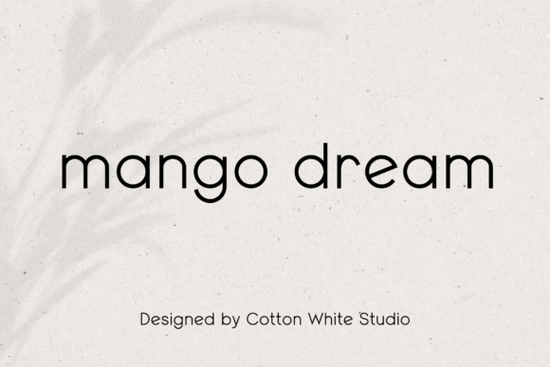
If you need a clean, modern typeface that stays professional without feeling cold or stiff, Mango Dream might be exactly what you’re looking for. This sans-serif font combines a round, minimalistic shape with enough versatility to work across websites, branding materials, and marketing campaigns. It comes with multilingual support, so if you design for a global audience, that’s one less thing to worry about. Whether you’re a craft seller, a small business owner, or a designer building a toolkit, let’s look at what this font actually does and whether it fits your next project.
What makes Mango Dream different from other sans-serif fonts?
A lot of sans-serif fonts lean either very geometric (think perfect circles and straight lines) or very humanist (with more varied stroke widths). Mango Dream sits somewhere in the middle. Its shapes are rounded but not exaggerated, giving it a friendly, approachable feel while still keeping a minimal, uncluttered look. The letterforms have a consistent width and a soft terminal, which makes the font feel contemporary but not trendy. If you’ve used fonts like Fantastic Moment and liked the modern touch, Mango Dream takes a similar approach with an even softer edge.
This round minimalism works especially well for:
- Headlines and titles where you want a clean, welcoming presence
- Body text in short blocks, like product descriptions or bullet lists
- Logos and wordmarks that need to stay legible at small sizes
- Multilingual projects because of the built-in language support
Because the design is simple, it doesn’t compete with other visual elements. That’s a big advantage if you’re layering text over photos or using it in packaging where the product itself needs to stand out.
Is Mango Dream font good for branding and marketing?
Yes, especially if your brand identity leans modern, simple, or minimal. The round shapes soften the typical “corporate” feel of many sans-serif fonts. For example, if you’re creating a website for a wellness brand, a children’s product line, or a creative agency, Mango Dream adds warmth without losing professionalism. The font also works well in marketing materials like social media graphics, email headers, and printed flyers because it reads clearly on screens and in small sizes.
The multilingual support is a real bonus for global marketing. If your brand expands into markets that use accented characters or non-Latin scripts (like Cyrillic or Greek), you don’t need to switch fonts. Consistency across languages helps build recognition. Many designers overlook this until they have to redo a whole campaign because a font doesn’t support the needed characters.
For small businesses and print-on-demand sellers, this means you can create a cohesive look across t-shirts, mugs, stickers, and social media without constantly adjusting the typeface.
Can I use Mango Dream font for print-on-demand products?
Absolutely. Round, minimal sans-serif fonts are very popular right now in the POD space. They work well on apparel because they are legible even when scaled up to large chest prints or down to small pocket logos. Mango Dream’s clean lines also translate well to embroidery, though with any decorative stitching you’ll want to test the smallest sizes first.
For mugs, phone cases, and home decor items, the font adds a modern touch that appeals to buyers looking for minimalist or Scandinavian-style designs. You can pair it with simple icons or geometric shapes without the text getting lost. The consistent stroke weight helps when printing on textured surfaces like ceramic or canvas.
If you’re comparing with other sans-serif options, Fantastic Moment is another favorite that leans slightly more playful. Mango Dream feels a bit more refined and serious, which makes it better suited for lifestyle products and gifts for professional audiences.
Is the multilingual support really complete?
Mango Dream covers a wide range of languages, including Western European, Central European, and many Nordic and Baltic languages. It also supports basic Cyrillic and Greek characters. While it might not cover every diacritic for less common languages, it gives you enough reach to design for most international audiences without needing a fallback font. That’s a time-saver when you’re producing multiple versions of a product or website.
Tip: If you work with a language that uses complex ligatures or special punctuation, it’s always a good idea to check the character map before committing to a font for that specific project.
Practical checklist before you download Mango Dream
Before you add Mango Dream to your toolkit, here are a few things to consider:
- Test the weight. Many designers buy a font and only use the Regular weight, but Mango Dream comes in multiple weights. Try Light for subtle typography and Bold for strong headlines.
- Pair it wisely. Because Mango Dream is round and minimal, pair it with a serif or script font if you need contrast. For a monochromatic look, stick to one weight and letter spacing.
- Check your project’s clarity needs. If you’re designing for very small text (below 10pt), make sure the round forms don’t blur together. Generally, it behaves well, but test on your intended medium.
- Use the multilingual characters. If you’ve never designed for another language before, try typesetting a short phrase in French or German to see how the accented letters flow.
Ready to try it? You can download Mango Dream on Creative Fabrica. If you’re still exploring options, check out the Fantastic Moment family as well both fonts are modern sans-serifs that can handle a wide range of projects without feeling generic.
Download Now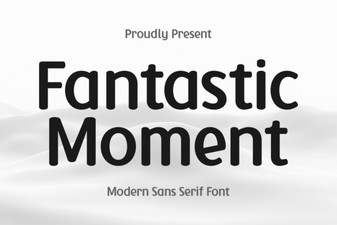 Fantastic Moment Font: Designs to Inspire Your Creativity
 Handcrafted Font Designs for Creative Projects
 Creative Font Projects for Children's Learning
 Vintage Barbie Fonts for Design & Craft Projects
 Crafty Bloom Font: Friendly Designs & Creative Uses
 Randy Sofia Font for Clean, Modern Designs